
Introduction
One of the greatest sources of confusion in Christian eschatology is the difference between the rapture of the church and the second coming of Jesus Christ. Many believers have mixed the two, assuming they are one event. Yet, the Bible shows that while they are related, they are distinct. Understanding this difference is vital because it shapes how we live in expectation of Christ’s appearing.
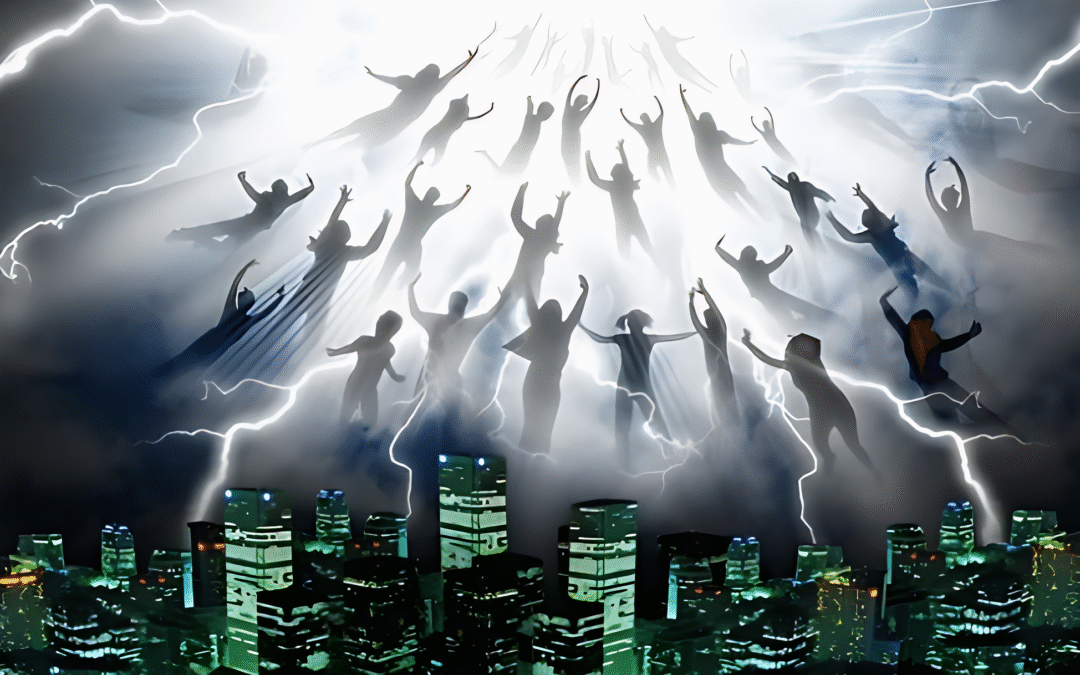
The rapture is the church’s upward call—believers caught up to meet the Lord in the air (1 Thessalonians 4:16–17). The second coming, however, is Christ’s return to the earth with His saints to establish His millennial reign (Revelation 19:11–16). One is about departure and translation; the other is about return and judgment.
The Rapture: Christ Comes for His Church
The rapture is the sudden, supernatural catching away of believers. The Greek word harpazo (to snatch, to seize suddenly) is used by Paul in 1 Thessalonians 4:17:
“Then we which are alive and remain shall be caught up together with them in the clouds, to meet the Lord in the air: and so shall we ever be with the Lord.”
This event is unique for several reasons:
- It is imminent — no signs are required before it happens. It can occur at any moment.
- It is a mystery revealed to the church — Paul calls it a mystery in 1 Corinthians 15:51–52: “We shall not all sleep, but we shall all be changed.”
- It is for the church — those who are born again and filled with the Spirit of God.
- It is about transformation — mortal bodies will be changed into glorified, immortal ones.
The rapture is not about judgment but about deliverance and consummation. It fulfills Christ’s promise in John 14:2–3:
“I will come again, and receive you unto myself; that where I am, there ye may be also.”
The Second Coming: Christ Returns with His Church
In contrast, the second coming is not imminent—it is preceded by specific signs and prophetic events, including the Great Tribulation. Revelation 19:11–14 describes it vividly:
“And I saw heaven opened, and behold a white horse; and he that sat upon him was called Faithful and True… and the armies which were in heaven followed him upon white horses, clothed in fine linen, white and clean.”
This is the return of Jesus with the saints, not for the saints. The purposes of the second coming are clear:
- To judge the nations (Matthew 25:31–32).
- To overthrow the Antichrist and his armies (Revelation 19:19–21).
- To establish the millennial reign—a thousand years of peace, justice, and righteousness (Revelation 20:1–6).
Unlike the rapture, which is joyful deliverance, the second coming involves dramatic global upheaval, judgment, and the beginning of Christ’s reign on earth.
Key Differences Between the Two Events
| Rapture | Second Coming |
|---|---|
| Christ comes for His saints (1 Thessalonians 4:16–17). | Christ comes with His saints (Revelation 19:14). |
| Believers are caught up into the clouds. | Christ descends physically onto the Mount of Olives (Zechariah 14:4). |
| Occurs before the Great Tribulation. | Occurs after the Great Tribulation. |
| Brings deliverance for the church. | Brings judgment upon the world. |
| Involves a sudden transformation (1 Corinthians 15:52). | Involves visible glory and power (Matthew 24:30). |
| Imminent—no prophetic sign must precede it. | Many signs must precede it (Matthew 24:21–30). |
Why the Distinction Matters
Many believers confuse the two events, and this robs them of living in constant readiness. If one thinks the rapture and second coming are the same, they may wait for signs to occur first. Yet, the Bible warns us to live ready, because the rapture is imminent (Matthew 24:44).
The distinction also reveals God’s plan of mercy. The rapture removes the church before the hour of wrath (Revelation 3:10). The second coming, however, reveals His justice as He judges rebellious nations.
The Church’s Blessed Expectation
The rapture is called “the blessed hope” (Titus 2:13) because it is about union, deliverance, and glorification. The second coming is called “the day of vengeance of our God” (Isaiah 61:2) because it is about judgment.
This means the church should live not in dread of tribulation but in joy of expectation. We are not waiting for Antichrist—we are waiting for Christ!
Practical Applications
- Live in Rapture-Consciousness
Every day, remind yourself that Jesus could come at any moment. Speak it out loud: “I am ready for His coming. I walk in holiness, faith, and expectation.” - Strengthen Your Evangelism
Time is short. The distinction between the rapture and the second coming should motivate us to win as many souls as possible. As Paul said:
“Knowing the time, that now it is high time to awake out of sleep: for now is our salvation nearer than when we believed.” (Romans 13:11)
- Rejoice, Not Fear
The rapture is a joyful expectation, not a fearful one. While the second coming brings judgment to the world, the rapture brings glory to the church.
Conclusion
The rapture and the second coming are not the same event. The first is Christ’s secret arrival for His church, the second is His open return with His church. The first is about transformation and union, the second about judgment and reign.
Understanding this difference keeps us alert, hopeful, and filled with joy. The trumpet may sound at any moment, and we will be caught up to meet Him in the air. And afterward, when He returns with His saints to rule, we shall reign with Him in glory.
So live with readiness, rejoice in expectation, and remember:
“Our conversation is in heaven; from whence also we look for the Saviour, the Lord Jesus Christ.” (Philippians 3:20)